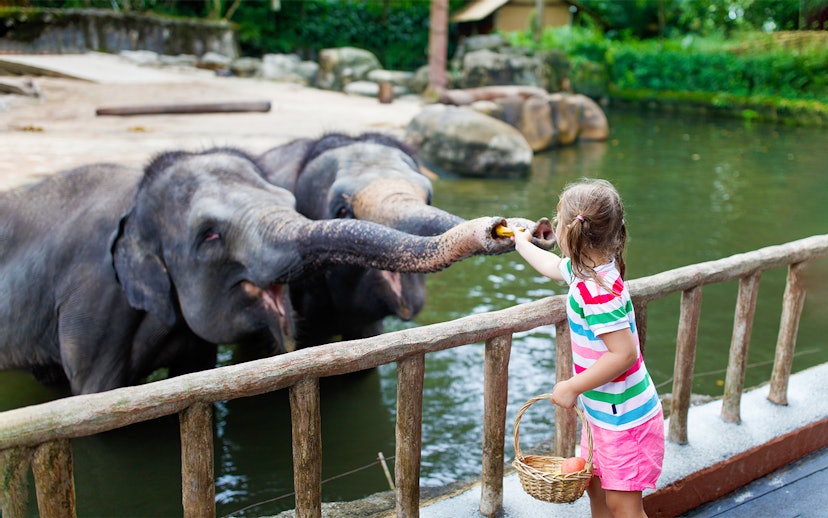
The Warsaw Zoo is a large city zoo best known for its elephants, great apes, and the moving WWII story of the Żabiński Villa. It feels more like a long park walk than a quick animal stop, so your route matters if you want both the headline habitats and a proper break. The biggest difference between a rushed visit and a good one is timing the indoor houses before weekend crowds build. This guide covers hours, entrances, tickets, routes, and what to prioritize.
If you want one fast planning read before you book, start here.
Warsaw Zoo sits in Praga-Północ beside Praski Park on the east bank of the Vistula, about 2–3km from Old Town.
Warsaw Zoo has 2 entrances, and most visitors default to the main gate even when transit makes the north gate easier.
When is it busiest? Weekends, school holidays, and late mornings from May–August are busiest, when indoor houses, food kiosks, and ticket lines all feel slower.
When should you actually go? Go on a weekday morning and do the hippo house, shark tank, and ape house first. This way, you’ll get more active animals and less stroller traffic in the indoor spaces.
Buying online matters most here because the biggest delay is often the ticket queue, not the walk inside. Get skip-the-line entrance tickets and you’ll usually start much faster on a busy day.
| Visit type | Route | Duration | Walking distance | What you get |
|---|---|---|---|---|
Highlights only | Main gate → hippos and shark aquarium → elephants → great apes → big cats → exit | 2–2.5 hrs | ~2.5km | You’ll cover the signature animals and main indoor houses, but you’ll move quickly and likely skip the aviary, playground break, and slower family areas. |
Balanced visit | Main gate → hippos and shark aquarium → elephants → great apes → aviary → carnivores and polar bears → children’s zoo and playground → exit | 3–4 hrs | ~4km | This adds the parts families enjoy most and gives you time to pause instead of power-walking between pavilions. |
Full exploration | Main gate → full animal route across all main sectors → reptile and smaller houses → children’s zoo → Żabiński Villa by prior arrangement → exit | 4.5+ hrs | ~6km | This gives you the zoo as both wildlife attraction and historic site, but it’s a long day on foot and works best if you pace meals and breaks well. |
Standard day tickets cover all animal houses and the main zoo route. The Żabiński Villa still needs a separate advance reservation.
✨ A guide adds the most if you want both wildlife highlights and the WWII history in one smooth visit. The site is large, the best feeding windows are spread out, and the villa sits off most casual routes.
Inclusions #
| Ticket type | What's included | Best for | Price range |
|---|---|---|---|
Skip-the-Line Tickets | General admission + all main animal houses + aquarium + aviary + playground access | A straightforward zoo visit where you want full flexibility and don’t mind planning your own route | From zł38.60 |
Warsaw Zoo has several broad animal sectors linked by leafy walking paths, and most visitors need 2–2.5 hours for the highlights or 3–4 hours for a more complete loop. The crowd-flow trick here is to do the indoor houses first, because late morning bottlenecks build fastest around the hippos, sharks, and apes.
Suggested route: Start with the hippo house and shark aquarium, then continue to elephants and great apes before noon, because those indoor spaces feel most crowded once school groups and families reach them. Save the playground and petting area for later, when kids need a reset and you’re closer to an easy exit.
💡 Pro tip: Start with the indoor houses and end with the playground or petting zoo. This saves you from doubling back when the central paths get busiest.


Species: African elephant habitat
This is one of the zoo’s standout modern spaces, and it feels very different from the older carnivore areas. The scale, skylights, and thick viewing window let you appreciate just how large the animals are without feeling rushed past them. Most visitors focus only on the elephants and miss the rock hyraxes sharing the area.
Where to find it: In the Elephant House pavilion on the main zoo route after the aquatic houses.
Species: Nile hippos and sand tiger shark exhibit
This is the zoo’s most surprising pairing, and it’s one of the few places where you get both heavy land mammals and a dramatic underwater display in one stop. The hippo pool is best when you catch them surfacing or feeding, while the adjacent shark tank rewards a slower look at the glass wall. Many people leave after the hippos and barely give the shark section 5 minutes.
Where to find it: Inside the hippo house near the entrance side of the zoo.
Species: Gorillas, chimpanzees, and other primates
If you only slow down in one indoor house, make it this one. The face-to-face glass views make it easy to linger, and the expressions, feeding behavior, and social dynamics are often more memorable than the larger outdoor paddocks. Most visitors stop for the gorillas and move on, but the chimpanzee spaces are just as rewarding if you give them time.
Where to find it: Near the north side of the zoo, close to the Jagiellońska entrance route.
Species: Lions and Siberian tigers
This is less about a flashy habitat and more about timing. When the cats are active, the experience is strong. You might even hear a lion’s roar across the grounds or catch the tigers pacing close to the barrier. But in the middle of a hot day they often disappear into long rest stretches. What many visitors miss is that late afternoon can be better here than the midday rush.
Where to find it: In the carnivore sector toward the later part of a standard zoo loop.
Species: Polar bears, brown bears, and black bears
The current bear areas are among the most discussed parts of the zoo, so it helps to come with realistic expectations. You’re here for the chance to see these charismatic animals up close, especially in cooler weather when they move more, not for the zoo’s newest architecture. Many visitors rush through if a bear is sleeping, but even a few extra minutes can reward you with movement.
Where to find it: In the carnivore and bear section along the outer paths.
Species: Domestic animals and family activity zone
This is worth prioritizing if you’re visiting with younger children, because it changes the pace of the day rather than just adding more animal viewing. The petting area, themed play structures, and benches nearby make it the easiest place to reset when attention spans dip. Adults sometimes treat it as optional, but it’s often the difference between a smooth visit and a tired one.
Where to find it: In the family-focused section near the central rest area and playground.
The crowd naturally gathers at the hippo pool, so the shark aquarium next door is easy to shortchange unless you plan for it. The same thing happens in the Elephant House, where the rock hyraxes get missed once people spot the main herd.
Warsaw Zoo works especially well for children because it mixes big-name animals with places to move, snack, and reset instead of expecting long periods of quiet museum-style attention.
⚠️ Re-entry is generally not permitted once you exit Warsaw Zoo. Plan restroom stops, lunch, and tired-kid breaks before leaving; otherwise you could face buying another ticket and, on busy weekends, another 15–30-minute gate queue.
Distance: 2km — about 10 min by taxi or 15 min by bus
Why people combine them: Both are strong family attractions, and the zoo’s flexible entry makes it easier to fit around a timed science-center visit.
Distance: 2–3km — about 10 min by taxi or 20 min by transit
Why people combine them: It’s the easiest same-day split between green space and classic sightseeing, especially if you want animals in the morning and dinner or a walk in Old Town later.
On-site: The zoo’s cafeteria and snack kiosks are convenient for a mid-visit refuel, but they make more sense for speed than for a memorable meal.
Other places nearby:
Most visits take 3–4 hours, though you can do a focused highlights route in about 2–2.5 hours. If you’re visiting with children, stopping at the playground, or arranging the Żabiński Villa, it’s easy to stretch the day to 4.5 hours or more.
No, you can buy tickets at the gate, but booking online is the better move on weekends and school holidays. It won’t change the zoo itself, but it can save you 15–30 minutes in the ticket line and makes arrival smoother with children.
Yes, on busy weekends it’s worth it because the delay is usually at the ticket booth rather than inside the zoo. If you visit on a weekday morning outside school holidays, standard entry is usually fine and the time savings are smaller.
Arrive 15–20 minutes before you want to start walking, even though the zoo is more flexible than a strict timed museum. That gives you enough room for scanning, maps, strollers, and picking the better entrance without losing your calm start.
Yes, a small backpack or day bag is practical here because the visit is long and mostly outdoors. The main thing is comfort rather than restriction; large bags just become annoying after a few hours of walking between habitats.
Yes, photography is generally allowed throughout the zoo. Skip flash in animal houses, don’t bring drones, and be considerate in narrow indoor viewing spaces where long photo stops can slow everyone else down.
Yes, group visits are possible, and the zoo also runs educational visits for school groups. If you want a more structured experience, it’s worth arranging it in advance, especially for weekdays when organized groups are common.
Yes, Warsaw Zoo is one of the easiest family attractions in the city because it mixes headline animals with a playground, petting area, snack stops, and broad walking paths. The sweet spot for most families is 3–4 hours, not an all-day marathon.
Mostly yes, and it’s one of the more manageable large outdoor attractions in Warsaw for mobility needs. The main paths are accessible, wheelchairs are welcome, and a limited number can be borrowed, but some older indoor areas are tighter and slower to navigate.
Yes, there’s a cafeteria and snack kiosks inside the zoo, and you also have easy food options in Praga or Old Town after your visit. If you want the least friction, either eat early inside or plan a proper meal once you leave.
Yes, but not as a casual walk-in stop. The villa is by appointment or pre-arranged tour, so you should secure that first and then build the rest of your zoo route around it.
Yes, Warsaw Zoo stays open in winter, but the day feels shorter and some animals are harder to spot. Winter visits work best if you go for a calmer atmosphere, cooler-weather species like polar bears, and lower crowd levels rather than maximum animal visibility.